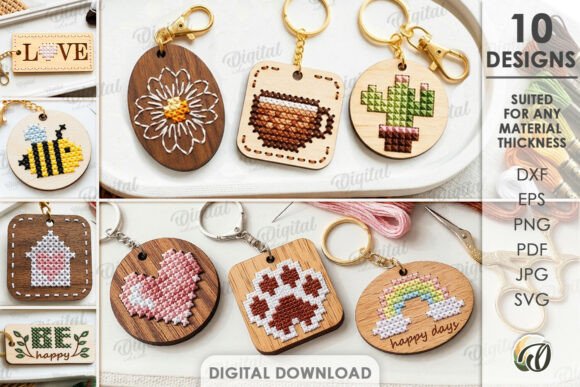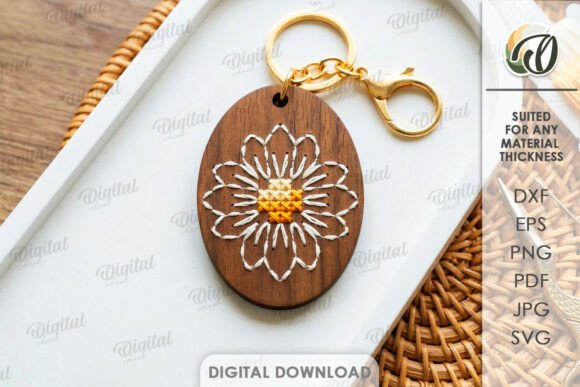
Review: Summer Cross Stitch Keychains Laser Cut
As a designer who spends half my life staring at stitch simulations and the other half untangling thread nests, I have learned to look past the glossy preview images. When I first encountered Summer Cross Stitch Keychains Laser Cut, my initial reaction was curiosity mixed with caution. The title suggests a hybrid approach—combining the rustic charm of cross-stitch aesthetics with modern laser-cut precision. For those of us in the embroidery and craft space, understanding how these elements translate from a digital file to a tangible, sellable product is crucial.
This is not just another generic floral motif. It is a specific asset designed for makers who want to bridge the gap between traditional needlework looks and contemporary manufacturing methods. Whether you are an Etsy seller looking to diversify your inventory or a hobbyist creating personalized gifts, evaluating this design requires a practical eye. Let’s break down how this asset performs in real-world scenarios, focusing on usability, visual impact, and commercial viability.
First Impressions and Visual Personality
The mood of Summer Cross Stitch Keychains Laser Cut is distinctly warm and inviting. It captures that nostalgic, handmade feeling of summer afternoons without veering into cluttered or overly complex territory. The layout feels balanced, with a visual personality that leans towards boutique branding rather than mass-produced kitsch. For embroidery designers, this is significant. A design that feels "busy" on screen often translates poorly to fabric, but this one maintains clarity.
The theme naturally lends itself to seasonal collections. Imagine this applied to a linen tote bag or a cotton apron. The aesthetic fits seamlessly into a summer product line, appealing to customers who value artisanal quality. However, because this bundle includes CNC files for laser cutting, the visual appeal extends beyond thread. It suggests a mixed-media approach where wood and thread might coexist, or where the laser-cut shape serves as a template for an embroidered patch.
Real-World Application: From Screen to Stitch
To test the viability of any machine embroidery design, I mentally place it on various substrates. Here is how I see this design performing in actual projects:
- Tote Bag Design: This is perhaps the strongest use case. The summer theme pairs perfectly with canvas or heavy cotton. The design’s scale seems appropriate for a central placement on a standard shopper bag, offering high visibility for small shop products.
- Sweatshirt Embroidery: On a fleece or French terry fabric, the design would need careful digitizing if it were purely stitched. However, since this involves laser-cut elements, it could serve as an applique base. Using a satin stitch border around a laser-cut wooden or felt shape can create a textured, high-value finished product.
- Personalized Gift Items: Think baby onesies or nursery decor. While the summer theme is broad, ensuring the thread colors are soft and pastel can make it suitable for baby embroidery. The clean lines help maintain professionalism, which builds customer trust.
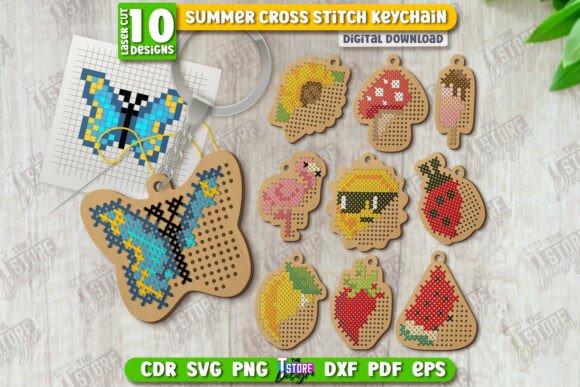
- Embroidered Patch Creation: If you are using the laser-cut files to create backing shapes or frames, this design excels. Patches are a huge trend for craft business owners. A laser-cut keyring shape can be repurposed as a stiffener for a patch, giving it structure without bulky interfacing.
For an Etsy seller, versatility is key. This asset allows for multiple revenue streams. You can sell the physical keychains, use the design on apparel, or even offer it as part of a digital embroidery file package if licensing permits. Always check the license terms before selling finished items or digital products.
Technical Considerations and Fabric Compatibility
While the visual appeal is strong, practical execution requires attention to detail. Not every fabric behaves the same way. Here are areas where you should proceed with caution:
Fabric Texture and Stabilizer: Cross-stitch styles rely on grid-like precision. If you are stitching this onto a textured fabric like terry cloth or a loosely woven linen, the details might get lost. Always use a proper stabilizer. For stretchy fabrics like jersey t-shirts, a cut-away stabilizer is non-negotiable to prevent distortion. Test the design on scrap fabric first to check thread color contrast and stitch density.
Small Hoop Sizes and Detail: If you plan to scale this down for small hoop sizes, inspect the small details closely. Tiny lettering or intricate corners can become dense stitch areas that cause puckering. Review the stitch density in your software. If the design is intended for laser cutting, ensure your machine and software are compatible with the provided CNC files. Just because it looks good on screen does not mean it will cut cleanly on every material.
Dark Fabric Challenges: On dark fabric, light-colored threads are essential for visibility. However, if the design relies on subtle shading, it may flatten out. Use high-contrast thread colors to maintain stitching clarity. I recommend testing it in black and white mockups to see if the silhouette holds up without color reliance.
Enhancing Brand Consistency and Value
For creative entrepreneurs, every design asset contributes to brand consistency. Summer Cross Stitch Keychains Laser Cut offers a cohesive look that can tie together a seasonal collection. When customers see a well-executed design on a holiday gift or a boutique product, it reinforces the perception of quality. This affects buyer engagement significantly. A sloppy stitch-out or a poorly cut edge can deter repeat customers, while a crisp, professional finished product encourages positive reviews.
Consider how this design fits into your printable mockup strategy. High-quality previews help sell digital embroidery files. If you are a digital product seller, showing this design on various backgrounds—light and dark fabric, wood textures, and lifestyle settings—can boost conversion rates. It demonstrates the versatility of the design assets you are offering.
Practical Designer Notes for Success
Before you commit to a large production run or list this as a new item in your small shop product lineup, keep these practical tips in mind:
- Verify Compatibility: The product description notes it is great for Laser Cutting Machines. Ensure your cutting machine and software are compatible with the file formats provided. Do not assume universal compatibility.
- Test Stitch Density: If you are embroidering the design directly, check for dense stitch areas that might perforate delicate fabrics. Adjust density if necessary.
- Check Licensing: Confirm whether the license allows for commercial embroidery projects. Some digital embroidery files are for personal use only. Clarify this before selling finished products.
- Mockup Variety: Create mockups for custom apparel, caps, and home decor. Show potential buyers how the design looks on different items.
- Quality Control: Inspect the laser-cut edges for charring. Adjust power and speed settings on your laser cutter to ensure clean cuts, especially if using wood or acrylic.
In conclusion, Summer Cross Stitch Keychains Laser Cut is a versatile tool for the modern maker. It bridges the gap between traditional craft and modern technology. By understanding its strengths and limitations, you can create high-quality handmade products that resonate with customers. Whether you are decorating a kitchen towel or launching a new line of embroidered patches, this design offers a solid foundation for creative exploration. Just remember to test, adjust, and verify before going live with your next big project.